
Juli McLoone
Library Blogs
Showing 1 - 6 of 6 items
Results
for Date: July 2026
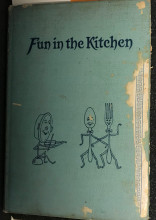
This month’s recipe offers a preview of Special Collections’ Fall exhibit: Faster and More Fun: American Home Cooking in the 1920s, with Chocolate Blanc Mange from Fun in the Kitchen (1927).
•
The Paths to the Plate project focuses on the impact of immigrants on Michigan’s foodways, asking three basic questions. 1. What did immigrants to Michigan eat? 2. Where did they get food from? And 3. How has their food made an impact on Michigan? Between myself and my fellow intern, we split the work by ethnic group. I focused on arab, latino, and black immigrants, as well as the already present indigenous foodways. I’m starting my senior year this fall so I assumed there would be a lot of required reading, and there was a good amount, but not nearly as much as I had anticipated. I feel like as an anthropology major I’m used to twenty-plus pages of reading per assignment. Research, both physical and digital, took over my summer, finding references through google scholar or the library website, reading articles or e-pubs. I checked out probably eleven books total this summer: more in three months than my last years of college combined.
After this "collection phase" came the notetaking, analyzing each passage and determining whether it would contribute to the project. I mostly summarized readings for my future self, highlighting aspects or quotes that I felt exemplified the argument that immigrants have impacted Michigan’s foodways. It was during this phase that we also started searching for and documenting images that could be included in the final exhibit. Most of the images I submitted were from the Library of Congress or the Janice Bluestein Longone Culinary Archive in the Special Collections of Hatcher Graduate Library. I had the absolute pleasure of getting to visit the archive twice this summer, both times with the goal of gathering images and reading anything exclusive to the archive.
I’ll admit that the work wasn’t always fun. As dedicated to my craft of cultural research as I am, it gets tedious to sit behind a desk for hours on end, looking at article after article, word after word: your time is spent, and in this day time is precious. It takes tough skin to investigate the various ways people wrote about immigrants to the United States, especially black and brown immigrants. While we have many accountings of the kinds of businesses and economic value immigrants were bringing to the state of Michigan from white journalists and anthropologists, we also have books and journals written by immigrants from that time. Their first-hand knowledge of recipes, timelines, and traditions spoke in stark contrast to the way anthropologists of the time documented these same people. As our information become more contemporary, the language changed, incorrect or ignorant language fading little by little, thanks to the work and contributions of immigrant communities and of black and brown anthropologists.
After this "collection phase" came the notetaking, analyzing each passage and determining whether it would contribute to the project. I mostly summarized readings for my future self, highlighting aspects or quotes that I felt exemplified the argument that immigrants have impacted Michigan’s foodways. It was during this phase that we also started searching for and documenting images that could be included in the final exhibit. Most of the images I submitted were from the Library of Congress or the Janice Bluestein Longone Culinary Archive in the Special Collections of Hatcher Graduate Library. I had the absolute pleasure of getting to visit the archive twice this summer, both times with the goal of gathering images and reading anything exclusive to the archive.
I’ll admit that the work wasn’t always fun. As dedicated to my craft of cultural research as I am, it gets tedious to sit behind a desk for hours on end, looking at article after article, word after word: your time is spent, and in this day time is precious. It takes tough skin to investigate the various ways people wrote about immigrants to the United States, especially black and brown immigrants. While we have many accountings of the kinds of businesses and economic value immigrants were bringing to the state of Michigan from white journalists and anthropologists, we also have books and journals written by immigrants from that time. Their first-hand knowledge of recipes, timelines, and traditions spoke in stark contrast to the way anthropologists of the time documented these same people. As our information become more contemporary, the language changed, incorrect or ignorant language fading little by little, thanks to the work and contributions of immigrant communities and of black and brown anthropologists.
Psychological safety has been an important topic for organizations and their leaders for decades. When the work culture encourages honest contributions by employees, and when mistakes are viewed as learning opportunities, diverse perspectives can be heard. Libraries as organizations have a role in creating psychologically safe environments. But is there any connection between psychological safety and our library assessments? This blog post suggests some connections for library assessment practitioners, as a result of the author's own reflection.
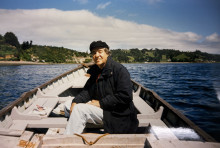
This post covers my time as a Michigan Library Scholars intern, working on the project, "Of Whales and Men: Patagonian Adventures." Throughout the summer, I engaged in archival research, edited a manuscript, and met with academic professionals to learn more about the field!
•
The state of Michigan is home to a diverse population, creating a melting pot of culture, tradition, and food. Michigan's complicated history with settler colonialism, immigration from across the world, and a vast agricultural sphere make this state an extremely interesting case study to view how immigration has shaped foodways. In this Michigan Library Scholars Project, Paths to Plate, me, my co-intern, and our mentor worked to understand how Michigan has adapted and transformed from demographic changes, adjusted farming and economic practices. We used a wide range of sources from digital newspaper databases, physical archives, and various other online resources to gather information and understand this minimally researched topic. Through a long research process, challenges that led to creative solutions, collaboration, and introspection, this project has been extremely informative on an academic level, as well as a personal one.
•
Introducing a couple instructional videos for making paper pots.