
Stories from and about library student employees and interns.
Student Stories
Posts in Student Stories
Showing 1 - 10 of 157 items
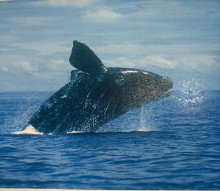
I spent the summer as a Michigan Library Scholar retyping and copy-editing Victor Perera's manuscript "Of Whales and Men: Patagonian Encounters." Working through Perera's archive helped me gain archival research skills, while exploring my Jewish identity, while also providing intersection between publishing, transcription work, and legal research. I aimed to have this manuscript prepared to be published in the near future.
When I began my Library Engagement Fellows project, I expected to spend most of my time organizing resources and learning a new digital platform. What I did not expect was how much I would learn about a region connected to my own family history. Over the course of two semesters, I worked with Librarian Jeff Martin to develop a research guide on Odisha, a state in eastern India, while gaining new perspectives on research, accessibility, and digital resource creation. My project began during the Fall 2025 semester and continued into the Winter 2026 semester. Working alongside Librarian Jeff Martin, I have been helping develop a South Asia LibGuide focused on Odisha, a state in eastern India. The guide is intended to serve as a resource for students, researchers, and community members interested in learning more about the region's history, culture, language, politics, and scholarly resources.
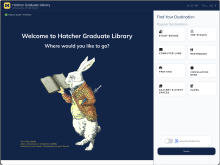
During my Summer Fellowship in Library User Experience, I explored wayfinding in U-M’s Hatcher Graduate Library. By reviewing past studies, speaking with library staff, and hearing directly from visitors, I gathered insights to design three conceptual wayfinding kiosk prototypes. This fellowship strengthened my research and design skills, while deepening my appreciation for the invisible design decisions that quietly help people feel confident and welcome in a public space.
•
During my summer internship at the University of Michigan's Art, Architecture & Engineering Library, I helped make historical international atomic energy reports more accessible by cataloging previously uncataloged microfiche reports. Although I expected a traditional engineering internship, the experience showed me how libraries support scientific research and innovation.
My primary responsibility was finding and recording metadata for reports so they could be discovered through the University of Michigan Library Catalog. I cataloged reports from organizations in Australia and Argentina, identifying publication details, report numbers, and abstracts while using library databases such as WorldCat. My co-intern and I also developed a standardized workflow that future interns can use to continue cataloging the collection.
The internship introduced me to library cataloging, metadata, and engineering gray literature while strengthening my research, communication, and problem-solving skills. I also attended presentations from librarians on topics including digitization, copyright, and information management, and toured several library facilities to learn how valuable research materials are preserved.
Working with historical nuclear energy reports connected to my interest in environmental engineering by highlighting how today's innovations are built on decades of previous research. Overall, the internship broadened my understanding of engineering by demonstrating that preserving and organizing scientific knowledge is just as important as creating new discoveries and that collaboration across disciplines is essential to advancing research.
My primary responsibility was finding and recording metadata for reports so they could be discovered through the University of Michigan Library Catalog. I cataloged reports from organizations in Australia and Argentina, identifying publication details, report numbers, and abstracts while using library databases such as WorldCat. My co-intern and I also developed a standardized workflow that future interns can use to continue cataloging the collection.
The internship introduced me to library cataloging, metadata, and engineering gray literature while strengthening my research, communication, and problem-solving skills. I also attended presentations from librarians on topics including digitization, copyright, and information management, and toured several library facilities to learn how valuable research materials are preserved.
Working with historical nuclear energy reports connected to my interest in environmental engineering by highlighting how today's innovations are built on decades of previous research. Overall, the internship broadened my understanding of engineering by demonstrating that preserving and organizing scientific knowledge is just as important as creating new discoveries and that collaboration across disciplines is essential to advancing research.
•
The Paths to the Plate project focuses on the impact of immigrants on Michigan’s foodways, asking three basic questions. 1. What did immigrants to Michigan eat? 2. Where did they get food from? And 3. How has their food made an impact on Michigan? Between myself and my fellow intern, we split the work by ethnic group. I focused on arab, latino, and black immigrants, as well as the already present indigenous foodways. I’m starting my senior year this fall so I assumed there would be a lot of required reading, and there was a good amount, but not nearly as much as I had anticipated. I feel like as an anthropology major I’m used to twenty-plus pages of reading per assignment. Research, both physical and digital, took over my summer, finding references through google scholar or the library website, reading articles or e-pubs. I checked out probably eleven books total this summer: more in three months than my last years of college combined.
After this "collection phase" came the notetaking, analyzing each passage and determining whether it would contribute to the project. I mostly summarized readings for my future self, highlighting aspects or quotes that I felt exemplified the argument that immigrants have impacted Michigan’s foodways. It was during this phase that we also started searching for and documenting images that could be included in the final exhibit. Most of the images I submitted were from the Library of Congress or the Janice Bluestein Longone Culinary Archive in the Special Collections of Hatcher Graduate Library. I had the absolute pleasure of getting to visit the archive twice this summer, both times with the goal of gathering images and reading anything exclusive to the archive.
I’ll admit that the work wasn’t always fun. As dedicated to my craft of cultural research as I am, it gets tedious to sit behind a desk for hours on end, looking at article after article, word after word: your time is spent, and in this day time is precious. It takes tough skin to investigate the various ways people wrote about immigrants to the United States, especially black and brown immigrants. While we have many accountings of the kinds of businesses and economic value immigrants were bringing to the state of Michigan from white journalists and anthropologists, we also have books and journals written by immigrants from that time. Their first-hand knowledge of recipes, timelines, and traditions spoke in stark contrast to the way anthropologists of the time documented these same people. As our information become more contemporary, the language changed, incorrect or ignorant language fading little by little, thanks to the work and contributions of immigrant communities and of black and brown anthropologists.
After this "collection phase" came the notetaking, analyzing each passage and determining whether it would contribute to the project. I mostly summarized readings for my future self, highlighting aspects or quotes that I felt exemplified the argument that immigrants have impacted Michigan’s foodways. It was during this phase that we also started searching for and documenting images that could be included in the final exhibit. Most of the images I submitted were from the Library of Congress or the Janice Bluestein Longone Culinary Archive in the Special Collections of Hatcher Graduate Library. I had the absolute pleasure of getting to visit the archive twice this summer, both times with the goal of gathering images and reading anything exclusive to the archive.
I’ll admit that the work wasn’t always fun. As dedicated to my craft of cultural research as I am, it gets tedious to sit behind a desk for hours on end, looking at article after article, word after word: your time is spent, and in this day time is precious. It takes tough skin to investigate the various ways people wrote about immigrants to the United States, especially black and brown immigrants. While we have many accountings of the kinds of businesses and economic value immigrants were bringing to the state of Michigan from white journalists and anthropologists, we also have books and journals written by immigrants from that time. Their first-hand knowledge of recipes, timelines, and traditions spoke in stark contrast to the way anthropologists of the time documented these same people. As our information become more contemporary, the language changed, incorrect or ignorant language fading little by little, thanks to the work and contributions of immigrant communities and of black and brown anthropologists.
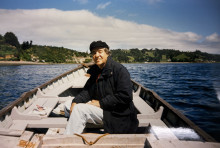
This post covers my time as a Michigan Library Scholars intern, working on the project, "Of Whales and Men: Patagonian Adventures." Throughout the summer, I engaged in archival research, edited a manuscript, and met with academic professionals to learn more about the field!
•
The state of Michigan is home to a diverse population, creating a melting pot of culture, tradition, and food. Michigan's complicated history with settler colonialism, immigration from across the world, and a vast agricultural sphere make this state an extremely interesting case study to view how immigration has shaped foodways. In this Michigan Library Scholars Project, Paths to Plate, me, my co-intern, and our mentor worked to understand how Michigan has adapted and transformed from demographic changes, adjusted farming and economic practices. We used a wide range of sources from digital newspaper databases, physical archives, and various other online resources to gather information and understand this minimally researched topic. Through a long research process, challenges that led to creative solutions, collaboration, and introspection, this project has been extremely informative on an academic level, as well as a personal one.
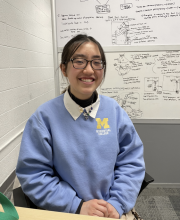
From October 2025 to April 2026, I worked alongside my amazing project partner, Katherine (Kate) Jeong, on Exploring Anime: Collections Research and Outreach Programming under our wonderful supervisor, Karen Reiman-Sendi, as part of a Library Student Engagement Fellows project. Our goal was to understand the scope of the University of Michigan Library’s anime collection and raise awareness of it to students and visitors of the library through outreach and programming events. Furthermore, we wanted to showcase that, as the University is a research institution, anime is an expansive genre worth analyzing in a cultural, stylistic, and literary context.
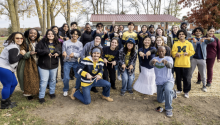
BLUElab Metro is far more than a typical student organization within the University of Michigan’s College of Engineering. We are a student-run, multidisciplinary team dedicated to a singular, powerful mission: to design sustainable, community-centered solutions that directly address local challenges while empowering the people most affected by them. We believe that true engineering excellence is found at the intersection of technical innovation and social responsibility. Our work focuses on long-term partnerships rather than short-term fixes, allowing us to design with our community members rather than just for them. This collaborative approach ensures that the outcomes are not just functional, but deeply tailored to the specific goals, cultural heritage, and needs of our partners.
Since 2023, our efforts have been entirely focused on a transformative partnership with Willow Run Acres (WRA), a nonprofit founded by T.C. Collins in Superior Township, Michigan. T.C. is a visionary community leader who views the land as a classroom and a tool for empowerment. Through WRA and the Clay Hill Community Farm, he works tirelessly to address food insecurity and the erasure of Black history in Washtenaw County. T.C.’s connection to farming is a generational legacy, handed down through ancestors who farmed under the most difficult circumstances of enslavement and sharecropping.
Since 2023, our efforts have been entirely focused on a transformative partnership with Willow Run Acres (WRA), a nonprofit founded by T.C. Collins in Superior Township, Michigan. T.C. is a visionary community leader who views the land as a classroom and a tool for empowerment. Through WRA and the Clay Hill Community Farm, he works tirelessly to address food insecurity and the erasure of Black history in Washtenaw County. T.C.’s connection to farming is a generational legacy, handed down through ancestors who farmed under the most difficult circumstances of enslavement and sharecropping.
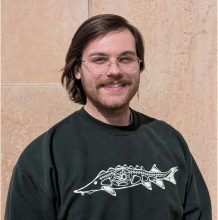
This project has come about as part of the UM Library’s Territorial Acknowledgement Working Group, who has investigated multiple tangible actions the University is able to accomplish to honor the original stewards of this land, the Anishnaabeg and Wyandot peoples, whose ‘land grant’ allows for this University’s existence. One of these action items is to become leaders in Indigenous Knowledge sharing, which includes this project to transcribe/caption Ojibwe language lessons to make them available online through the UM Library via Alma Digital. These language materials were created by Basil Johnston, a prominent Anishnaabe scholar, whose work continues to educate native people long past he walked on.