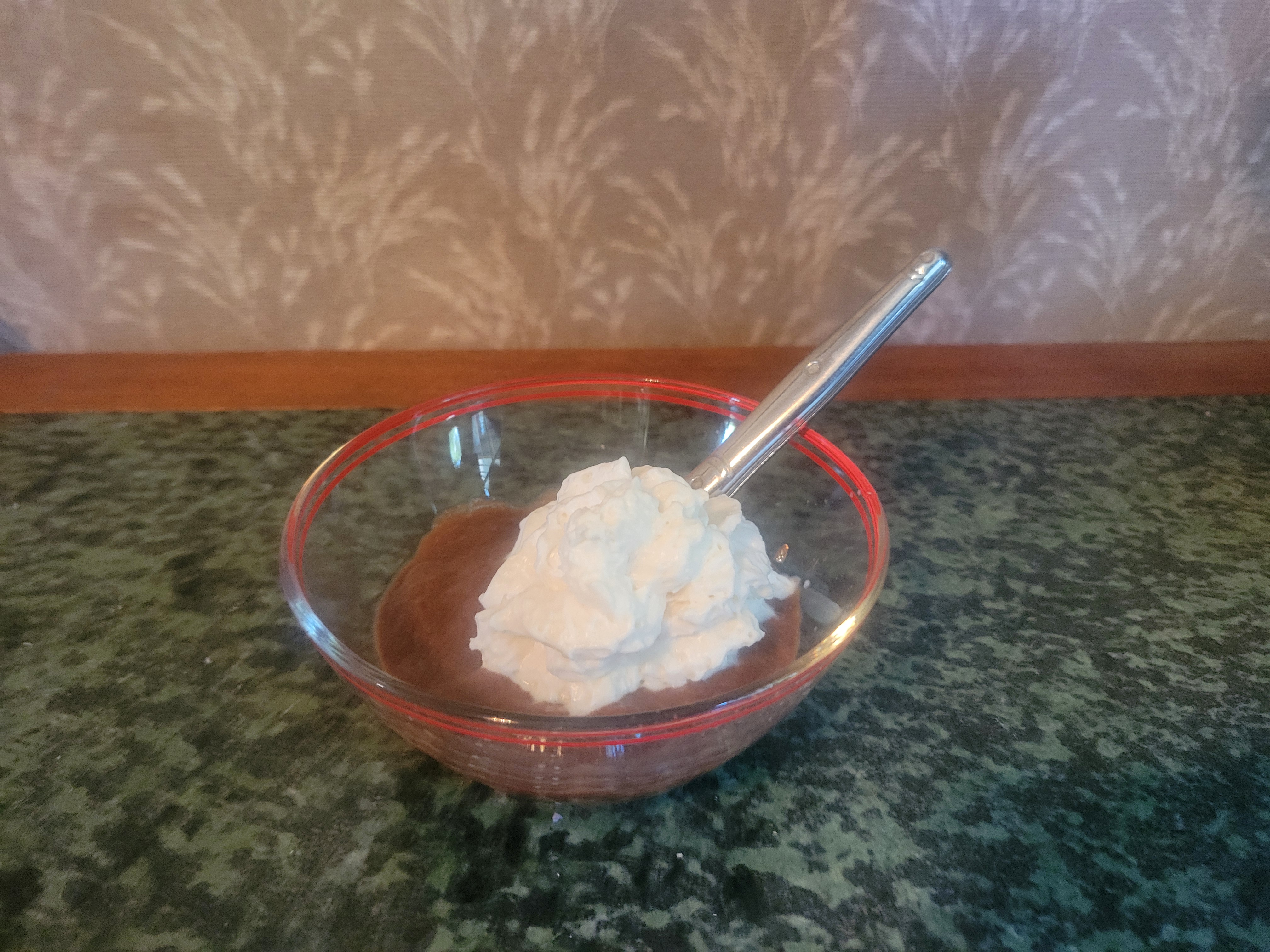
This month’s recipe offers a preview of Special Collections’ Fall exhibit: Faster and More Fun: American Home Cooking in the 1920s, which will open September 21, 2026. Fun in the Kitchen is one of several books in this exhibit that exemplifies authors’ and publishers’ efforts to make cooking seem like a fun activity that was practically a kind of leisure, with updated appliances and the novelty of temperature-controlled gas and electric ranges. In this book, author Marie Hill offers “easy recipes for little girls,” with pages decorated by drawings of girls with bobbed hair in oversized aprons and whimsical depictions of cats, monkeys, and toys. An inscription on the front paste-down of JBLCA's copy reads “To Jan / Love Dad / 1927.” Jan, or Janet as she writes her own name in the book, apparently prepared several of the recipes. Her descriptions are not verbose, but she described the Chocolate Blanc Mange as “good” and recorded that it was eaten by “Janet, Grandpa, and Grandmother.”
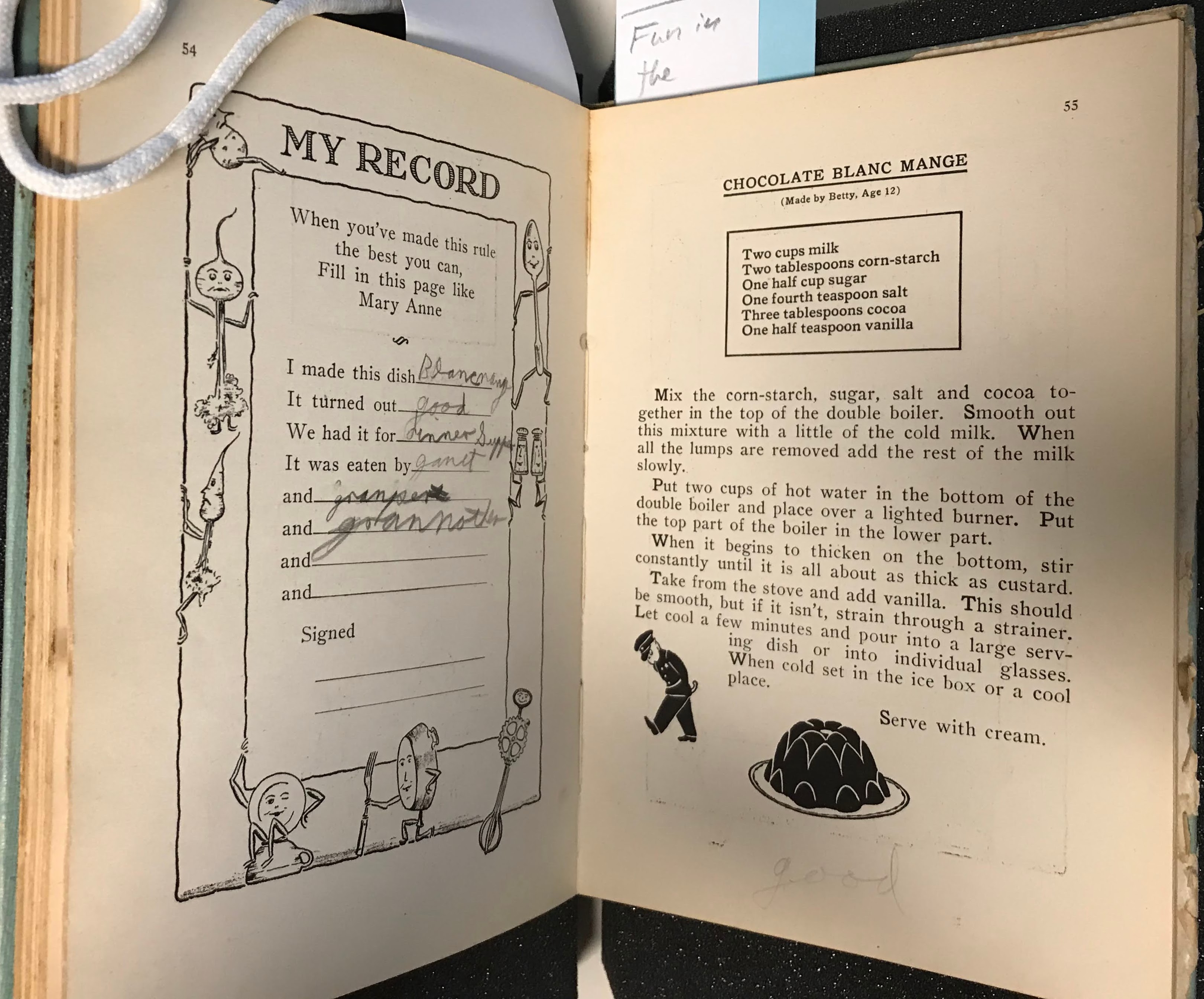
Marie P. Hill. Fun in the Kitchen: A Record Cook Book of Easy Recipes for Little Girls. Chicago: Reilly & Lee Co., 1927. Gift of Eunice Burns.
Chocolate Blanc Mange from Fun in the Kitchen: A Record Cook Book of Easy Recipes for Little Girls (1927)
Two cups milk
Two tablespoons corn-starch
One half cup sugar
One fourth teaspoon salt
Three tablespoons cocoa
One half teaspoon vanillaMix the corn-starch, sugar, salt and cocoa together in the top of the double boiler. Smooth out this mixture with a little of the cold milk. When all the lumps are removed add the rest of the milk slowly.
Put two cups of hot water in the bottom of the double boiler and place over a lighted burner. Put the top part of the boiler in the lower part.
When it begins to thicken on the bottom, stir constantly until it is all about as thick as custard.
Take from the stove and add vanilla. This should be smooth, but if it isn’t, strain through a strainer. Let cool a few minutes and pour into a large serving dish or into individual glasses. When cold set in the ice box or a cool place.
Serve with cream.
Each recipe in this book is credited to a little girl between the ages 8 and 12, so I decided to call on a child assistant to take the lead on this recipe. To a 21st century parent (at least to this one), age 8 seems young to operate a range, so I wasn’t prepared to leave my assistant chef entirely to her own devices. However, she measured and mixed the cornstarch, sugar, salt, and cocoa (perhaps not quite to Fanny Farmer’s level-measurement standard, but close enough for purposes of pudding) and poured in the milk. However, she rather lost interest during the (admittedly prolonged) stirring and waiting stage. I called her back when the pudding began to thicken and she excitedly stirred in the vanilla, and was eager to try to results, which she declared “great!”