
Alyssa Simone Wakefield
Library Blogs
Showing 1 - 10 of 2104 items
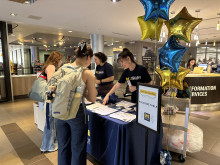
On Monday, August 31, 2026, the first day of the fall semester, the Shapiro Undergraduate Library hosted Party For Your Mind—an event designed to welcome (and welcome back) students to the library.

The U-M Library rebuilt its website using Astro, replacing Gatsby, React, and GraphQL with a simpler, more maintainable architecture. Without changing the user-facing design or functionality, the migration reduced homepage JavaScript by 99% and image payloads by 75%, while improving performance and eliminating post-load layout shifts.
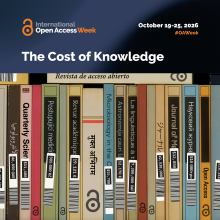
For Open Access Week, Deep Blue Repository and Research Data Services (DBRRDS) staff recap their work identifying, digitizing and uploading 95 U-M dissertations into Deep Blue Documents - that were previously only available in print.
For Open Access Week, Deep Blue Repository and Research Data Services (DBRRDS) staff recap several projects investigating the copyright status of dissertations in Deep Blue Documents - which resulted in 10,041 digital dissertations being made open access for the first time!
For Open Access Week, Deep Blue Repository and Research Data Services (DBRRDS) staff highlight why making University of Michigan dissertations available to the general public has a positive impact. Through their own words, requestors—from tribal members, agencies, zoos, writers, and authors’ families—show the value of dissertations far beyond academia.
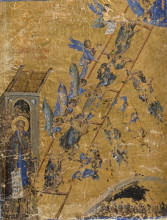
Join us at the Special Collections Research Center on Friday, October 23, to celebrate the culmination of a fifteen-year project to catalog the University of Michigan Library’s extraordinary collection of Greek manuscripts.
•
Join us on Thursday, October 22nd from 4:00-5:30pm in the Hatcher Gallery Event Space for the first Longone Lecture, a biennial lecture series exploring the history of food and drink in the United States. We are delighted to welcome our first speaker, Rebecca Sharpless, Professor of History at Texas Christian University. Dr. Sharpless writes on the intersections of food, women, and work in the American South. This event is hybrid and a zoom link is also available.
Join us this Thursday, October 15th, between 4-6p for our next Third Thursdays at the Library event of the semester!

Join Curator Juli McLoone on Tuesday, Oct. 13th from 2:00-3:00pm for coffee and conversation on about the exhibit Faster and More Fun: American Home Cooking in the 1920s. Learn more about the books and artifacts featured in the exhibit, the titles that didn’t quite fit into the exhibit cases, and the story of how this exhibit’s narrative took shape. Coffee and tea will be served.

In 2025, the University of Michigan Library underwent a nine-month strategic planning process. This blog post details early efforts to design and plan for assessment activities in support of the library’s new strategic plan.