
Anecdotes and other notes from the U-M Special Collections Research Center.
Beyond the Reading Room

Posts in Beyond the Reading Room
Showing 261 - 270 of 414 items
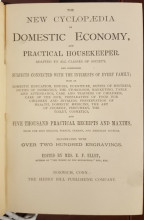
For the past two years, the Special Collections Library has celebrated Pi Day (3/14) by sharing pie recipes from the Janice Bluestein Longone Culinary Archive (JBLCA). This year, we bring you a pair of pies from The new cyclopaedia of domestic economy and practical housekeeper...(1872), edited by Elizabeth Fries Ellet.

We are pleased to announce the opening of a new exhibit from the Special Collections Library. It includes an extraordinary selection of magical, religious, and medical artifacts held at Special Collections, the Papyrology Collection, and the Kelsey Museum of Archaeology. These objects are an extraordinary evidence of how people coped with physical and mental ailments from antiquity through the Middle Ages and the Renaissance.

Join us next Monday (30th January) for a lecture with Harlan Lebo, author of Citizen Kane: A Filmmaker's Journey.

Preserving the history of labor movements has been core to the Labadie Collection’s mission since its very beginnings more than a century ago. In 2016, two important collections on 20th century labor organizing have been arranged to better facilitate research. The Joyce Kornbluh Collection (3.25 linear ft.) and the Don Stewart IWW Collection (3 linear ft.) conserve evidence of the regular confrontations between workers, corporations, and government throughout the past hundred years.
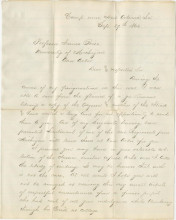
I am frequently asked by students and faculty: where do our rare book collections come from? While we have purchased many extraordinary books since the early years of the University of Michigan, many of our treasures were bequeathed by grateful alums and faculty. The reasons why they donated these artifacts are often fascinating, revealing little-known stories that shed light not only on the history of our institution but on our country at large. The book featured in this post is a rare seventeenth-century edition and Latin translation of the Homer's Iliad...
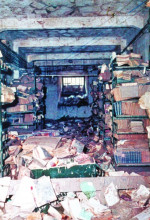
A curator's overview of the exhibit “The Florence Flood, November 1966: The Conservation of Books at the Biblioteca Nazionale Centrale and Beyond.”

An 8-year project to digitize our Islamic Manuscripts Collection is now finished!
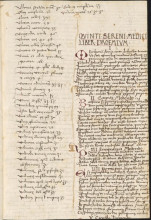
The Liber medicinalis (Book of Medicine) is a medical treatise of around 1,200 dactylic hexameters, traditionally attributed
to the second-century Roman author, Quintus Serenus Sammonicus (d. beginning of 3rd c. AD). It contains sixty-four therapeutic recipes,
divided into two sections: recipes for illnesses affecting individual organs listed from head to toe, and recipes for general ailments like injuries, fevers, fractures and dislocations, insomnia, toothache, and poisoning.
to the second-century Roman author, Quintus Serenus Sammonicus (d. beginning of 3rd c. AD). It contains sixty-four therapeutic recipes,
divided into two sections: recipes for illnesses affecting individual organs listed from head to toe, and recipes for general ailments like injuries, fevers, fractures and dislocations, insomnia, toothache, and poisoning.
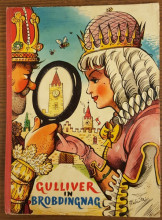
Today we celebrate the final day of Picture Book Month and also the 349th birthday of Jonathan Swift, English satirist and poet, most famous for his authorship of Gulliver’s Travels. In honor of both, this post highlights two picture book editions for children from the Hubbard Collection of Imaginary Voyages.

An unforgettable figure of the anarchist and syndicalist communities, Federico Arcos (1920-2015) was known for his generosity and the unabating commitment with which he pursued his ideals. Friends of the Labadie Collection remember Arcos as a long-time benefactor and collector. Federico and his wife Pura curated in their home in Windsor, Canada, an important library of anarchist books, newspapers, and archives that never failed to impress their many guests. In addition to the many items he endowed the Labadie Collection with, Arcos bequeathed his personal papers, now inventoried.