
Emma Brown
Posts tagged with User Experience
Showing 1 - 10 of 19 items

As the User Experience and User Interface Designer embedded in Project DOR, it’s my responsibility to develop and test new interface designs that carry over all our insights and recommendations from the previous five years of research on Digital Collections. Our recent study on discovery in Digital Collections informed design and development plans for Project DOR, guiding us in decision making related to Generative AI integration in our soon-to-be built search system.
The second Library Search Benchmark Survey launched earlier this year and we gathered feedback from students, faculty, staff and library employees about finding and accessing materials through Library Search. We also measured changes in user satisfaction, ease of use, user challenges and wins from our first survey in 2022. Participation from users outside the library grew significantly and responses helped us identify clear and actionable insights we’re excited to share and act on in the coming year.
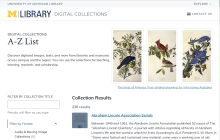
Olivier Bahizi, recipient of our summer 2025 Fellowship in Library User Experience, shares insights from his study of challenges users face when navigating the U-M Library's archival and digital collections across several platforms. Key themes include difficulties in discovery and access, limitations due to metadata, and lack of awareness and information literacy about archival materials.
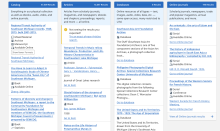
LIT’s Design and Discovery department received generous support from an anonymous donor to fund a Library User Experience Research Fellow position. Our first fellow was Suzan Karabakal, a master’s student at the U-M School of Information. She investigated and recommended changes to the way Library Search presents results. Suzan conducted user research to identify specific changes we could make to improve our “Everything” results screen and search results for Catalog and Articles.
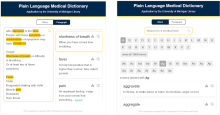
In 2024, updates to the Plain Language Medical Dictionary (PLMD) included big improvements for accessibility and user experience, plus adding support for images. We fixed contrast issues, unclear icons, and missing labels to meet WCAG 2.1. Search also got smoother, and instructions are now clearer. In addition, we added image support with JSON updates for URLs and alt text. With our legacy hosting environment shutting down, we moved the PLMD moved to GitHub Pages as part of the project. This provides better stability and automatic updates via GitHub Actions.

This blog post explores the challenges faced by novice users of the University of Michigan's Library Search interface, drawing on user research conducted with undergraduate students and librarians. The research aimed to understand how students approach library searches, to identify their pain points, and learn how they navigate the Everything results page. By gaining insights into these areas, the research aimed to identify opportunities for improvement and inform the design of more user-friendly library search tools.
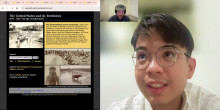
Part 2 of the series "Uncovering Needs of Filipino Researchers with our Philippines Digital Collection" explores a UX research study aimed at improving the University of Michigan’s Philippines digital collection interface. The study initially focused on understanding user pain points with the legacy collection interface. Following the launch of a redesigned interface, short-term fixes were implemented based on user feedback, while long-term needs were documented for future platform updates.
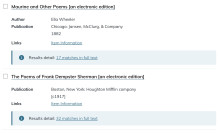
As user experience researchers and designers, it is our job to design better solutions for complex interfaces. Read on to learn our research and design process from discovering a usability issue to proposing solutions in collaboration with developers.

This blog post reflects on the learning experience I had as a novice user research (UX) intern at the U-M Library. Through this nurturing and eye-opening experience, I enhanced my understanding of research operation, the activities which support the user research conducted by library employees in the Design & Discovery unit of the library.
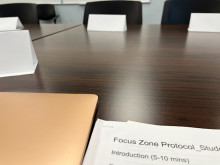
In Fall 2022, the Library Environments department began a pilot of two designated “zoned” spaces in response to user feedback asking for more information about what to expect from a study space. We conducted focus groups and integrated participatory design to learn about how users are perceiving and experiencing these labeled spaces.