
Anecdotes and other notes from the U-M Special Collections Research Center.
Beyond the Reading Room
Posts in Beyond the Reading Room
Showing 161 - 170 of 412 items
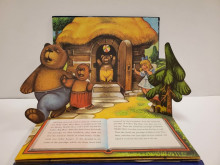
The Special Collections Research Center is pleased to announce a new online exhibit: A Menagerie of Animal Tales, curated by students in Dr. Lisa Makman’s English 313 course: Children’s Literature and the Invention of Modern Childhood.
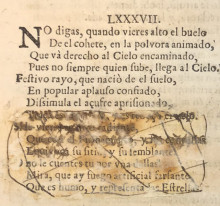
When examining a selection of rare books that had been requested for a class presentation about the impact of censorship in early modern Spain, I noticed something truly remarkable in one of these books. Our copy of the eighteenth-century edition of Francisco de Quevedo y Villegas’ El Parnaso español y musas castellanas, published in Barcelona in 1703, had been manually, and massively, expurgated by a representative of the Spanish Inquisition, Joseph Pinell, as he himself stated on the title page: Expurgavi ex Commisione S(anc)ti Officii die 8 Aprilii/ Joseph Pinell, Supr(emus). Missionum (I, Joseph Pinell, the highest of delegates, have expurgated it by a mandate of the Holy Inquisition on April 8 1760).
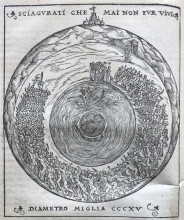
We are pleased to report about our recent acquisition of the first edition of Alessandro Vellutello’s influential commentary on Dante Alighieri’s Divine Comedy, which was published by Francesco Marcolini da Forlì in Venice in 1544. Undeniably, this edition marked a significant shift in the history of the iconography and reception of Dante’s poem, departing from the previous allegorical interpretations by Cristoforo Landino and Girolamo Benivieni, and challenging Antonio Manetti’s reconstruction of the topography of Hell as described by Dante.
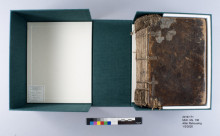
The Renaissance and Medieval Manuscript Collection belonging to the University of Michigan Library consists of an impressive array of medieval and early modern manuscripts from multiple cultures and languages, including Greek, Latin, Armenian, and Ethiopian. Fortunately, many of the manuscripts within this collection have largely been left in their original bindings and most damages have gone untreated.
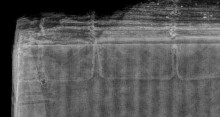
The University of Michigan Library and the Detroit Institute of Arts have recently collaborated in a project to produce x-ray images of the hidden structure inside a fourteenth-century Greek manuscript binding.
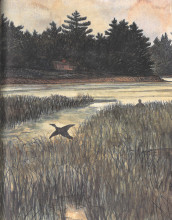
Join Special Collections today for a Great Lakes Theme Semester event at 3pm in Room 660D. Dr. Elizabeth Goodenough of the Residential College will give a presentation exploring the landscapes of the Great Lakes as they shape the lives of children, writers, and illustrators. Also, from 4-6pm tomorrow, stop by Special Collections After Hours in the open study space adjacent to the 6th floor Reading Room. A wide range of published and archival material from Michigan children's literature authors and illustrators will be on display. Light refreshments will be served.
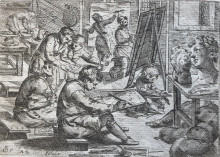
This blog post features an extraordinary well-preserved copy of what is perhaps one of the earliest extant drawing manuals that were published in Western Europe in the first half of the seventeenth century. Its author is Odoardo Fialetti, an Italian artist whose professional life flourished in Venice at the end of the sixteenth century; Fialetti had access to Tintoretto’s workshop, eventually becoming an accomplished copperplate engraver. While more than 200 engravings are attributed to him, Fialetti is best known for the illustrations he created for his two drawing manuals published in Venice in 1608 and 1609. Indeed, these two manuals became extremely popular among young artists, having a considerable impact on subsequent European manuals of this type published throughout the seventeenth and eighteenth centuries. In a few words, a drawing manual consisted of a collection of images of the human body that served as models for young apprentices; these illustrations represented the body in full or in sections, and were arranged in increasing difficulty. Essentially, these manuals were self-taught guides and, since they were meant to be heavily used as opposed to be shelved merely for reference, currently they are rarely found at libraries, museums, or private collections.
The Special Collections Research Center is pleased to announce the new exhibit Dear Stranger: Diaries for the Public and Private Self. Join us to celebrate the power of personal writing at the exhibit opening and journaling workshop on Tuesday, January 21.
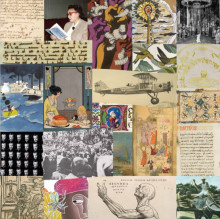
Applications are now open for the Ralph C. and Mary Lynn Heid Research Fellowships to support research requiring substantial on-site use of our special collections.
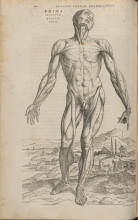
Join us today for our December Special Collections After Hours open house! You are all invited to explore a great variety of early printed books containing illustrations of the human body that reflect the science of dissection as well as the latest artistic theories in early modern Europe. The display will include richly illustrated treatises by well-known authors such as Leonardo da Vinci and Andreas Vesalius. Refreshments.
Time: 4:00-6:00 pm.
Location: Special Collections Research Center. Hatcher Library Room 660D
Time: 4:00-6:00 pm.
Location: Special Collections Research Center. Hatcher Library Room 660D