
Emma Brown
Library Blogs
Showing 1 - 10 of 88 items
Results
for keyword: digital preservation

As the User Experience and User Interface Designer embedded in Project DOR, it’s my responsibility to develop and test new interface designs that carry over all our insights and recommendations from the previous five years of research on Digital Collections. Our recent study on discovery in Digital Collections informed design and development plans for Project DOR, guiding us in decision making related to Generative AI integration in our soon-to-be built search system.

This blog post chronicles the Asia Library's major events and highlights of Academic Year 2026 while celebrating achievements, retirements, and new hires.
In July 2024, Library Information Technology launched Project DOR (Digital Object Repository), a multi-year project dedicated to the development of a new repository. The new repository will be used for digital collections to replace the existing digital collections platform. Project DOR will provide a brand new tailored solution for packaging, ingest, storage, and access to digital collections.
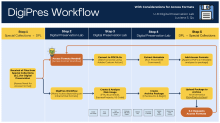
In the second post in our series on normalizing Word documents, we get into the nitty-gritty of how we chose PDF/A-2u and the results of our migration and accessibility testing.
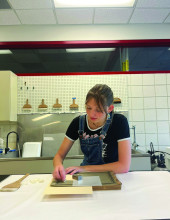
U-M student interns supported by the Mark and Theresa Lafer Preservation Fund offers students real-world experiences in the preservation of library collections, physical and digital. Learn how these experiences are opening doors to careers in preservation and conservation.
The thinking behind our decision to normalize files associated with the Microsoft Word program to the PDF/A-2u format for access and preservation purposes, and a brief overview of the migration process.

In this interview, Dr. Kathy Klinich, research scientist at the UM Transportation Research Institute, describes their research and why they decided to share their data sets entitled "Finite Element Models of Wheelchairs and Associated Components to Support Wheelchair Transportation Research" and "Evaluating Wheelchairs for Potential Use as Aircraft Seating: Test Data."

In this interview, Brian Derstine, research staff analyst with Morphomic Analysis Group in Michigan Medicine, describes their research and why they decided to share their data sets entitled "Dataset for: Relative muscle indices and healthy reference values for sarcopenia assessment using T10 through L5 computed tomography skeletal muscle area" and "Quantification of hepatic steatosis on post-contrast computed tomography scans using artificial intelligence tools [Dataset]" in Deep Blue Data.
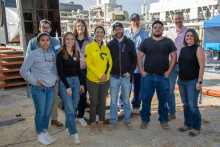
In this interview, Dr. Jenna Stolzman, a recent graduate from the Mechanical Engineering PhD program describes their research and why they decided to share his data set entitled “Dataset for: Effects of crosswind and shroud geometry on performance of low-flow, non-assisted flares,” in Deep Blue Data.

In this interview, Dr. María Natalia Umaña describes her research and why she decided to share her data set entitled "Dataset of wood and leaf traits of tropical dry forests seedlings and adults" in Deep Blue Data.