
International Love Data Week 2026 is February 9-13, 2026. The theme this year is Where’s the Data? The U-M scholars who have shared their data publicly are enthusiastically answering this question.
Deep Blue Data is a repository offered by the University of Michigan Library that provides access and preservation services for digital research data that were developed or used in the support of research activities at U-M.
In honor of Love Data Week, we reached out to some recent Deep Blue Data depositors to ask about the history of their work, unique discoveries they made along the way, and how they see their data being useful to their research communities and beyond.
We hope you enjoy learning more about the scholars behind the data sets. As a reminder, all data sets in Deep Blue Data are openly accessible for anyone to download and use, because we love data.
Dr. María Natalia Umaña is an Associate Professor in the Ecology and Evolutionary Biology department (part of LSA). She is a forest ecologist who studies how biodiversity is maintained in some of the most species-rich ecosystems on Earth, tropical forests. Her research examines how trees acquire and use resources, and how these strategies influence forest structure, dynamics, and species composition. Peter Williams is a postdoctoral researcher working with Natalia and Elise Zipkin from Michigan State University. His research seeks to understand how ecosystems function through studying the interactions of plants, mammals, and birds with their environments and with other species. She and Peter deposited their dataset "Dataset of wood and leaf traits of tropical dry forests seedlings and adults." This data underlies their 2025 journal article entitled "Ontogenetic shifts in wood anatomy and leaf traits in tropical dry forests." In this interview, she describes her research and why she decided to share this data set publicly.
What prompted you to conduct your research in this area?
Tropical forests are the most diverse forests in the world and play a key role in storing carbon and regulating Earth's climate. Among them, tropical dry forests are especially vulnerable as only a small fraction of their original extent remains today, and they are still poorly understood. As climate change intensifies droughts and other stresses, understanding how these forests function and persist has become increasingly urgent.
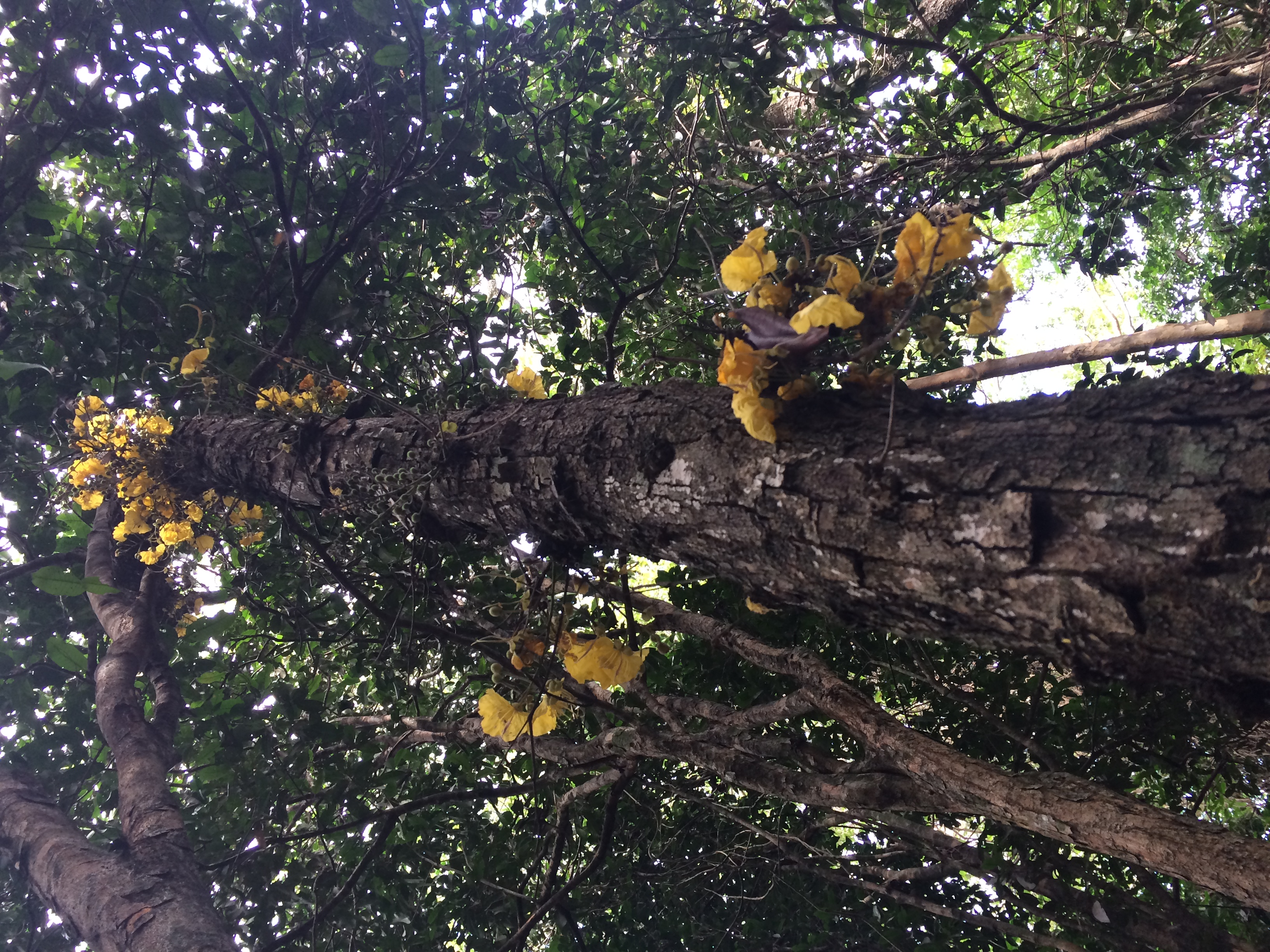
A mature tree bursting with beautiful yellow flowers
For those not familiar with your field, what is the one thing you think is most important/interesting to know/unique about your work or your findings?
Our research shows that trees are not static in how they function, they change as they grow. Seedlings and adult trees differ in how their leaves and wood are built and how those traits work together to help them survive and grow. We found that traits linked to how trees move water through their bodies become more tightly linked and important as trees grow taller, which influences how forests respond to environmental stress like drought.
How do you hope your data might be encountered or reused out in the world?
We hope our data will be used by other researchers to make broad comparisons across regions and forest types. It can help scientists compare tropical dry forests in the Americas with those in other continents or examine how different tropical forests respond to climate stress. By contributing to larger datasets, our work can help build a more global understanding of forest resilience.
What is one thing you learned during the process of preparing your data for deposit or sharing?
We learned that clear metadata is just as important as the data themselves for ensuring others can understand and build on our work.
Why do you think sharing data is important?
Sharing research data makes science more transparent and allows research to have a broader impact beyond a single study. In the context of global challenges like climate change and biodiversity loss, open data helps scientists work together across regions to develop more effective solutions