
Updates on our work in digital preservation and research data.
Bits and Pieces
Posts in Bits and Pieces
Showing 1 - 10 of 83 items
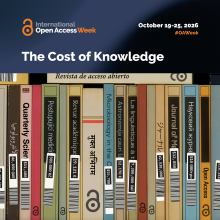
For Open Access Week, Deep Blue Repository and Research Data Services (DBRRDS) staff recap their work identifying, digitizing and uploading 95 U-M dissertations into Deep Blue Documents - that were previously only available in print.
For Open Access Week, Deep Blue Repository and Research Data Services (DBRRDS) staff recap several projects investigating the copyright status of dissertations in Deep Blue Documents - which resulted in 10,041 digital dissertations being made open access for the first time!
For Open Access Week, Deep Blue Repository and Research Data Services (DBRRDS) staff highlight why making University of Michigan dissertations available to the general public has a positive impact. Through their own words, requestors—from tribal members, agencies, zoos, writers, and authors’ families—show the value of dissertations far beyond academia.
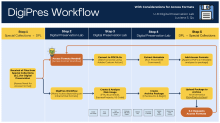
In the second post in our series on normalizing Word documents, we get into the nitty-gritty of how we chose PDF/A-2u and the results of our migration and accessibility testing.
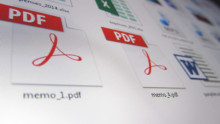
The thinking behind our decision to normalize files associated with the Microsoft Word program to the PDF/A-2u format for access and preservation purposes, and a brief overview of the migration process.

In this interview, Dr. Kathy Klinich, research scientist at the UM Transportation Research Institute, describes their research and why they decided to share their data sets entitled "Finite Element Models of Wheelchairs and Associated Components to Support Wheelchair Transportation Research" and "Evaluating Wheelchairs for Potential Use as Aircraft Seating: Test Data."

In this interview, Brian Derstine, research staff analyst with Morphomic Analysis Group in Michigan Medicine, describes their research and why they decided to share their data sets entitled "Dataset for: Relative muscle indices and healthy reference values for sarcopenia assessment using T10 through L5 computed tomography skeletal muscle area" and "Quantification of hepatic steatosis on post-contrast computed tomography scans using artificial intelligence tools [Dataset]" in Deep Blue Data.
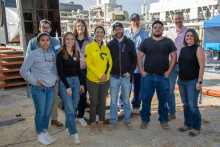
In this interview, Dr. Jenna Stolzman, a recent graduate from the Mechanical Engineering PhD program describes their research and why they decided to share his data set entitled “Dataset for: Effects of crosswind and shroud geometry on performance of low-flow, non-assisted flares,” in Deep Blue Data.
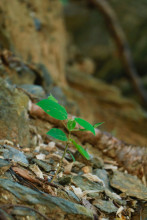
In this interview, Dr. María Natalia Umaña describes her research and why she decided to share her data set entitled "Dataset of wood and leaf traits of tropical dry forests seedlings and adults" in Deep Blue Data.
•
This Bits & Pieces blog post talks about the Detroit Metro Area Communities Study (DMACS) and its expansion, the Michigan Metro Area Communities Study (MIMACS), and their initial releases of closed-ended response data via the U-M Library's Deep Blue Data platform.