
Atlas Fracasso
Posts tagged with Engineering in Blog Student Stories
Showing 1 - 3 of 3 items
•
During my summer internship at the University of Michigan's Art, Architecture & Engineering Library, I helped make historical international atomic energy reports more accessible by cataloging previously uncataloged microfiche reports. Although I expected a traditional engineering internship, the experience showed me how libraries support scientific research and innovation.
My primary responsibility was finding and recording metadata for reports so they could be discovered through the University of Michigan Library Catalog. I cataloged reports from organizations in Australia and Argentina, identifying publication details, report numbers, and abstracts while using library databases such as WorldCat. My co-intern and I also developed a standardized workflow that future interns can use to continue cataloging the collection.
The internship introduced me to library cataloging, metadata, and engineering gray literature while strengthening my research, communication, and problem-solving skills. I also attended presentations from librarians on topics including digitization, copyright, and information management, and toured several library facilities to learn how valuable research materials are preserved.
Working with historical nuclear energy reports connected to my interest in environmental engineering by highlighting how today's innovations are built on decades of previous research. Overall, the internship broadened my understanding of engineering by demonstrating that preserving and organizing scientific knowledge is just as important as creating new discoveries and that collaboration across disciplines is essential to advancing research.
My primary responsibility was finding and recording metadata for reports so they could be discovered through the University of Michigan Library Catalog. I cataloged reports from organizations in Australia and Argentina, identifying publication details, report numbers, and abstracts while using library databases such as WorldCat. My co-intern and I also developed a standardized workflow that future interns can use to continue cataloging the collection.
The internship introduced me to library cataloging, metadata, and engineering gray literature while strengthening my research, communication, and problem-solving skills. I also attended presentations from librarians on topics including digitization, copyright, and information management, and toured several library facilities to learn how valuable research materials are preserved.
Working with historical nuclear energy reports connected to my interest in environmental engineering by highlighting how today's innovations are built on decades of previous research. Overall, the internship broadened my understanding of engineering by demonstrating that preserving and organizing scientific knowledge is just as important as creating new discoveries and that collaboration across disciplines is essential to advancing research.
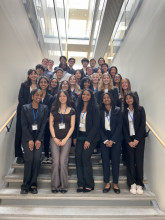
The Initiative Team through M-HEAL details their process of creating portable, inexpensive, and safe bassinets that are able to incubate newborns. Through feedback from medical personnel and library staff, they are able to improve future versions of the bassinet and its associated baby carrier to combat neonatal hypothermia.
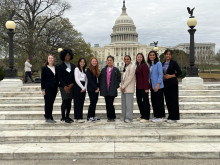
On April 2nd, 2025, ten delegates from the University of Michigan's Society of Women Engineers (SWE) chapter traveled to Washington, D.C., to participate in SWE’s annual Congressional Outreach Day. Through representing the voices of countless women and marginalized individuals who are often excluded from governmental conversations, U-M SWE members endorsed a targeted list of federal legislative priorities and funding requests to ensure the success of marginalized groups working in STEM.