
Learning procedures in pediatric emergency medicine, especially lumbar punctures, is tough. They’re high-stakes, not done often, and hard to practice in real time. So I tried a different approach: 3D printing a spine model for quick, hands-on training.
The idea is part of a larger push toward just-in-time training (JITT): short, focused practice right before or during clinical care. Instead of relying on simulation centers, this brings learning directly into the ED.
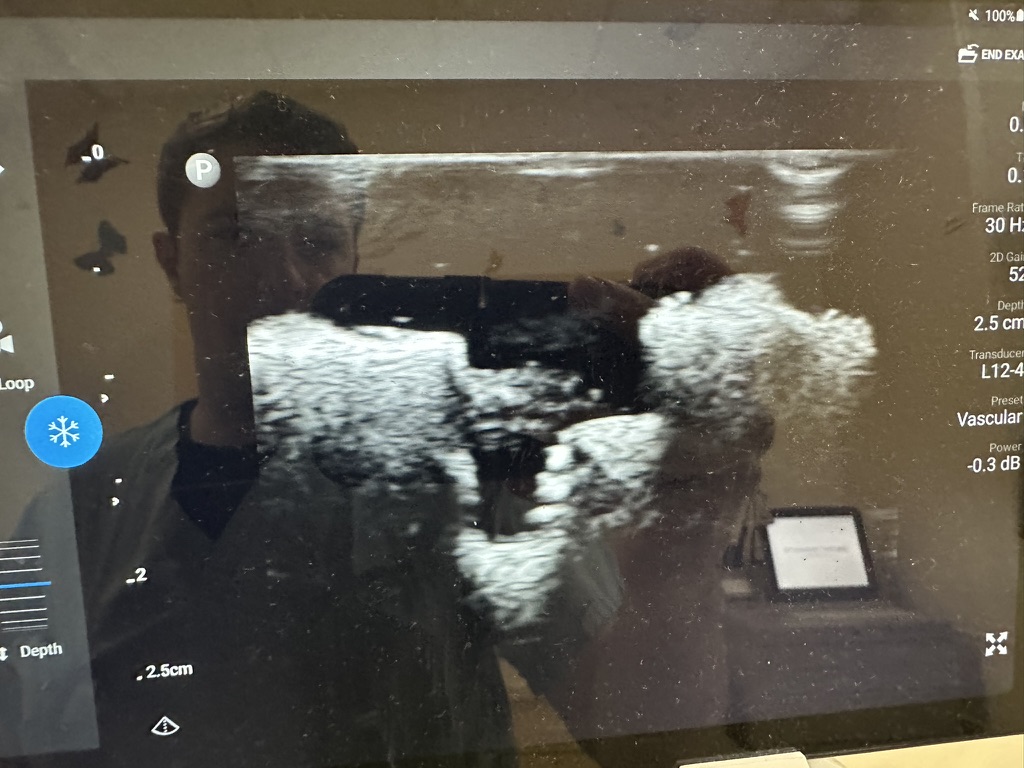
3D printing makes this possible. It’s cheap, fast, and customizable. I designed a simplified lumbar spine model focusing on the key landmarks you actually use. After some trial and error, I had a durable model that could be used repeatedly. I embedded it in ballistics gel which allowed a see-through tissue and placed a tube through where the spinal cord would be so learners could withdraw "CSF" when they were successful. The see-through gel allows learners to visualized while still getting a feel for the procedure and the nature of the 3D resin allows it to be seen on ultrasound.
Now, learners can quickly review anatomy, practice positioning, and build confidence on the spot.
Huge thank you to the Shapiro Design Lab for teaching me how to use the 3D printer and making this project possible.
This is just the start, 3D printing opens the door to cheap and accessible simulation modules that can be deployed immediately. We hope to design 3D prints using real CT scans to model additional procedures in the pediatric ED.
An image of a fetal ultrasound.