
Summer calls for cool drinks and cool eats. This month’s recipe comes from Fannie Farmer’s The Boston Cooking School Cook Book (1920), third edition, third printing.
The Boston Cooking School was founded by Sarah E. Hooper, a member of the Women’s Education Association and chair of its Committee on Industrial Education. The cooking school opened in 1879 with self-taught cook Johanna Sweeney as first teacher, intended both for housewives and women hoping to earn a living as cooks. The school’s popularity and influence grew in the following decades, especially under one-time-student-turned-principal Fannie Farmer in the 1890s. Farmer’s The Boston Cooking School Cook Book quickly became an American classic, with several revised editions appearing through the early decades of the 20th century. While Fannie Farmer did not invent standardized measurements, she certainly helped popularize them.
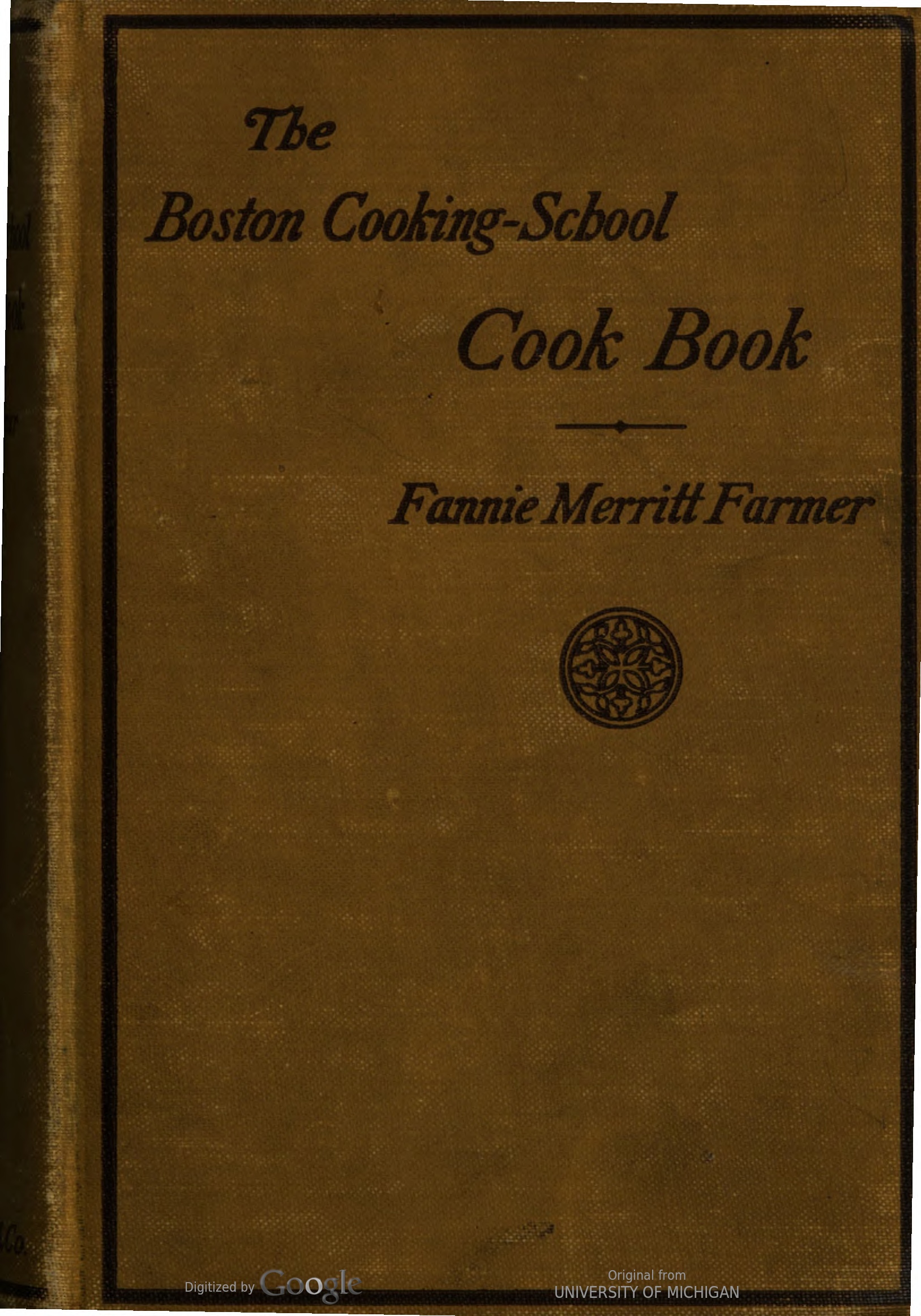
The Boston Cooking School Cook Book (1920) by Fannie Farmer. University of Michigan Library, Special Collections Research Center (Janice Bluestein Longone Culinary Archive).
This recipe for “Sicilian Sorbet” appears as part of the chapter on “Ices, Ice Creams, and Other Frozen Desserts,” which Farmer opens by defining various kinds of frozen desserts. I recommend clicking through to read this page, as it’s quite interesting and sometimes surprising. Typically, I would describe any frozen fruit juice concoction as sorbet, but in Farmer's terms, sorbet is, “strictly speaking, frozen punch,” which in turn is defined as “water ice to which is added spirit and spice,” and water ice is defined as, “fruit juice sweetened, diluted with water, and frozen.” However, Farmer also notes that sorbet is sometimes used to refer to water ice, “where several kinds of fruit are used." That seems to be the case with today's "Sicilian Sorbet":
1 can peaches
1 cup sugar
2 cups orange juice
2 tablespoons lemon juicePress peaches through a sieve, add sugar and fruit juices. Freeze and serve.
Juicing lemons and oranges is quite straightforward, but pressing canned peaches through a sieve turned out to be an unexpected challenge! Preparing historical recipes often raises more questions than it answers. In this case, I found myself wondering whether sieves of the 1910s and 1920s were coarser than today’s? Or if canned peaches of the time were softer than the typical Del Monte can of peach slices today?
In any case, with much effort and frustration, the peaches were mashed enough to more-or-less go through the sieve, but quite a lot of peach solids remained. I combined the remaining ingredients and froze the mixture in an electric ice maker. This is, of course, entirely anachronistic; for those possessing an old-fashioned hand crank ice cream maker, Fanny Farmer provides detailed instructions on the proportions of rock salt and ice to be used.
How was the result? Reviews varied. For my part, the texture reminded me of slightly-melted, too-sweet, frozen orange juice concentrate and I was disappointed that the peach flavor really didn’t come through very much (but, again, it’s possible that more peach solids were intended to make their way through the sieve than I could manage). On the other hand, one of my taste testers really appreciated the fresh flavor of the freshly squeezed oranges, and both children who tried it thought it wasn't too sweet at all. One even thought it needed more sugar!
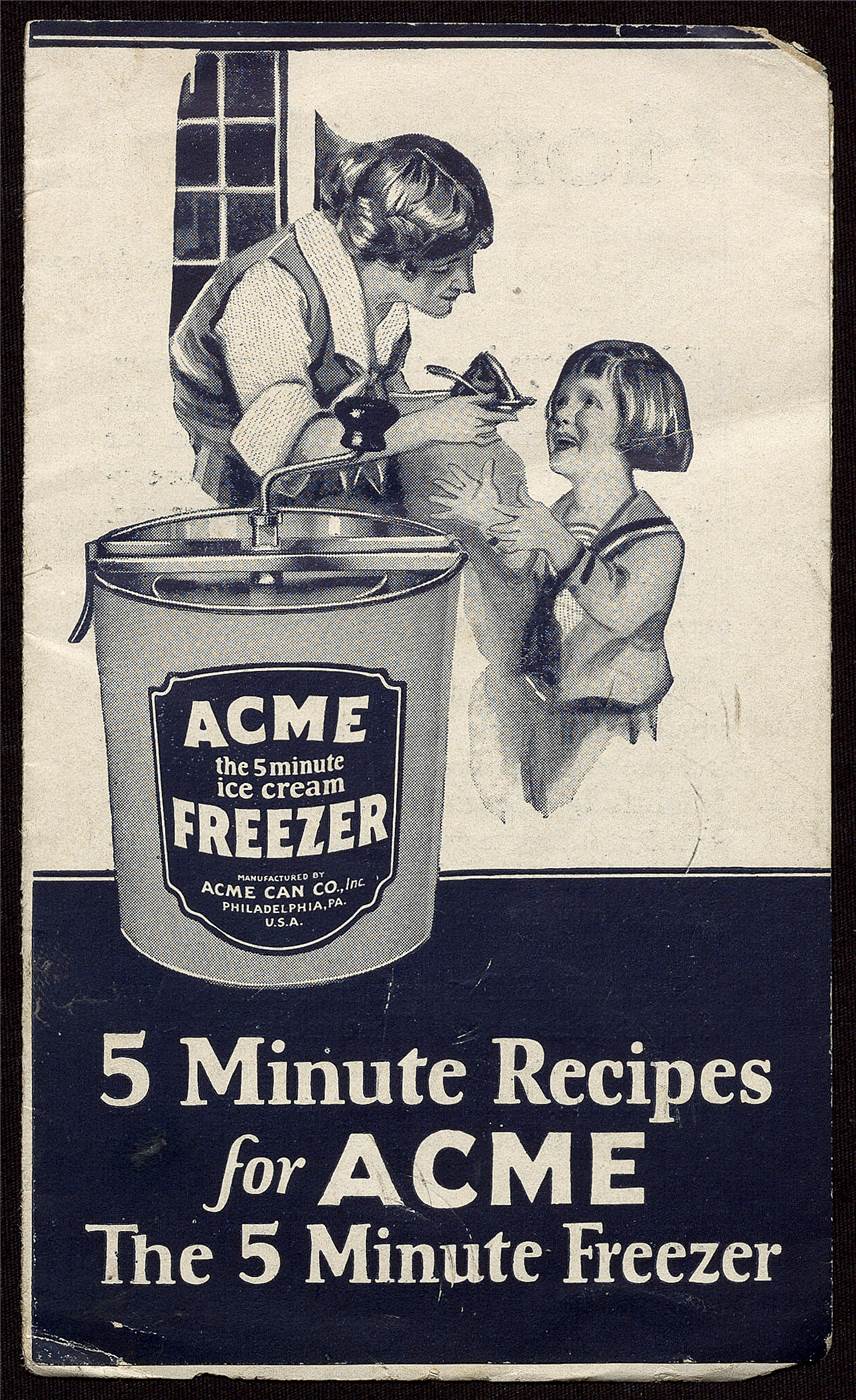
5 Minute Recipes for ACME. The 5 Minute Freezer. [Culinary ephemera : refrigerators]. Box 63. University of Michigan Library, Special Collections Research Center (Janice Bluestein Longone Culinary Archive).