In just a few weeks, the Special Collections Research Center will open its fall exhibit, Faster and More Fun: American Home Cooking in the 1920s on Monday, Sept. 21st. Be sure to join us for the opening celebration from 4-5:30pm that evening for a panel conversation among Food Studies scholars Mark Johnson, Margot Finn, and Helen Veit.
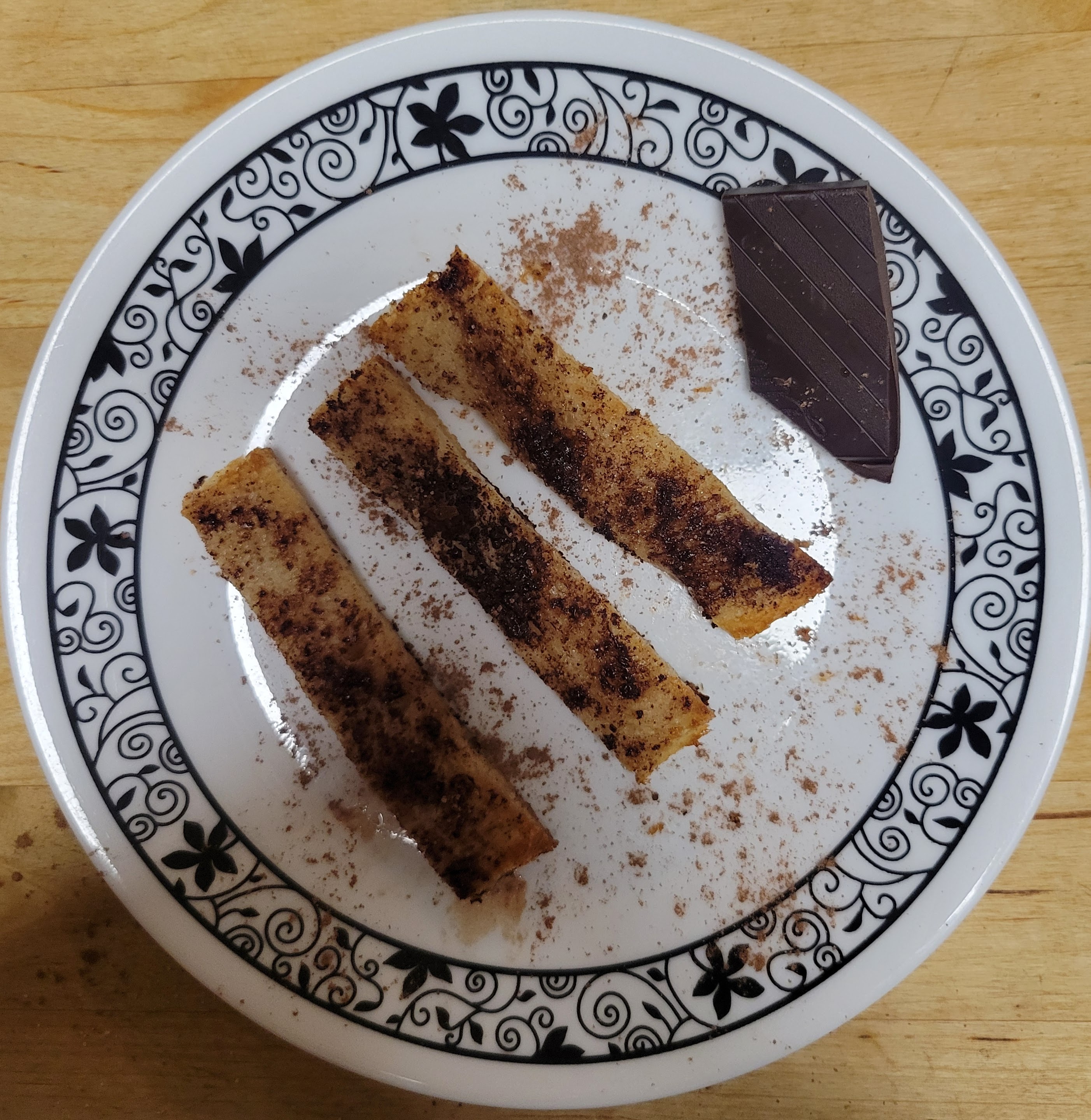
In the meantime, you can get a sneak peak at the upcoming exhibit through our August “Recipe of the Month.” Drawn from Meals for Small Families by Jean Mowat, “Cocoa Sticks” epitomizes one of the key themes of the 1920s: an unapologetic use of commercially made and packaged foodstuffs in support of simple & speedy meal preparation. This narrative was pushed by food processors and manufacturers seeking to expand their market, of course, but it resonated with the growing number of middle class housewives who carried out their own cooking (rather than relying on domestic servants) and with women across social classes who found appeal in the idea that less time in the kitchen could mean more time for wage work and for leisure activities. According to Mothers in Industry, a study published in 1925, "in most homes cooking, with its allied processes of marketing and dish-washing, takes from four to seven hours a day.” With that as a benchmark, one can easily appreciate the promise of store-bought bread and canned goods!
Cocoa Sticks
Cut slices of bread into narrow strips, trimming off the crust. Spread both sides with butter and sprinkle with cocoa. Set in the oven a few minutes to brown.
A search in Hathi Trust brings up a number of earlier recipes for Cocoa Sticks, such as this 1907 recipe by Miss Elizabeth Kevill Burr in The Lutheran Cook-Book from Ohio, and this 1910 recipe from Maria Parloa’s Chocolate and Cocoa Recipes. However, these are recipes for a kind of rectangular cookie, not toasted bread.
The bread in this recipe could, of course, be any kind of bread, but given the growing popularity of soft, store-bought white bread in the 1920s and the arrival of sliced bread on the market in 1928, I thought a basic white loaf from Trader Joe’s seemed like a good fit.
The cocoa presented a bit of a puzzle, and one that I can’t say I’ve solved to my satisfaction. My initial assumption was that this should be a sweet dish, with something like hot cocoa mix sprinkled onto the bread. However, the author uses “cocoa” without any adjectives to indicate sweetened or unsweetened throughout the book and the myriad of cakes and cookies in the dessert chapter almost certainly use unsweetened cocoa (given the amount of sugar they also contain).
In the end, I made a batch of “Cocoa Sticks” with regular, unsweetened Hershey’s cocoa powder and another with some home-made hot cocoa mix. To my surprise, they were actually both quite good. The sweet ones, of course, taste more like a dessert, but the combination of salty and bitter flavors on the unsweetened sticks was unexpectedly enjoyable. Good news for my tastebuds, but bad news when it comes to feeling any certainty about the author's intention!
As a final note, this recipe doesn’t specify a particular temperature, and my sense of experimentation didn’t quite run to testing batches at different temperatures, but 3-4 minutes at 400 degrees Fahrenheit seemed to work quite well.