
We are pleased to announce a new exhibition created to coincide with the American Semiquincentennial, the 250th anniversary of the United States Declaration of Independence. On view from May 8 to September 20, 2026 in the Hatcher Gallery Exhibit Room, the display will feature a selection of historical materials and artifacts from the Joseph A. Labadie Collection documenting the Peoples Bicentennial Commission (PBC).
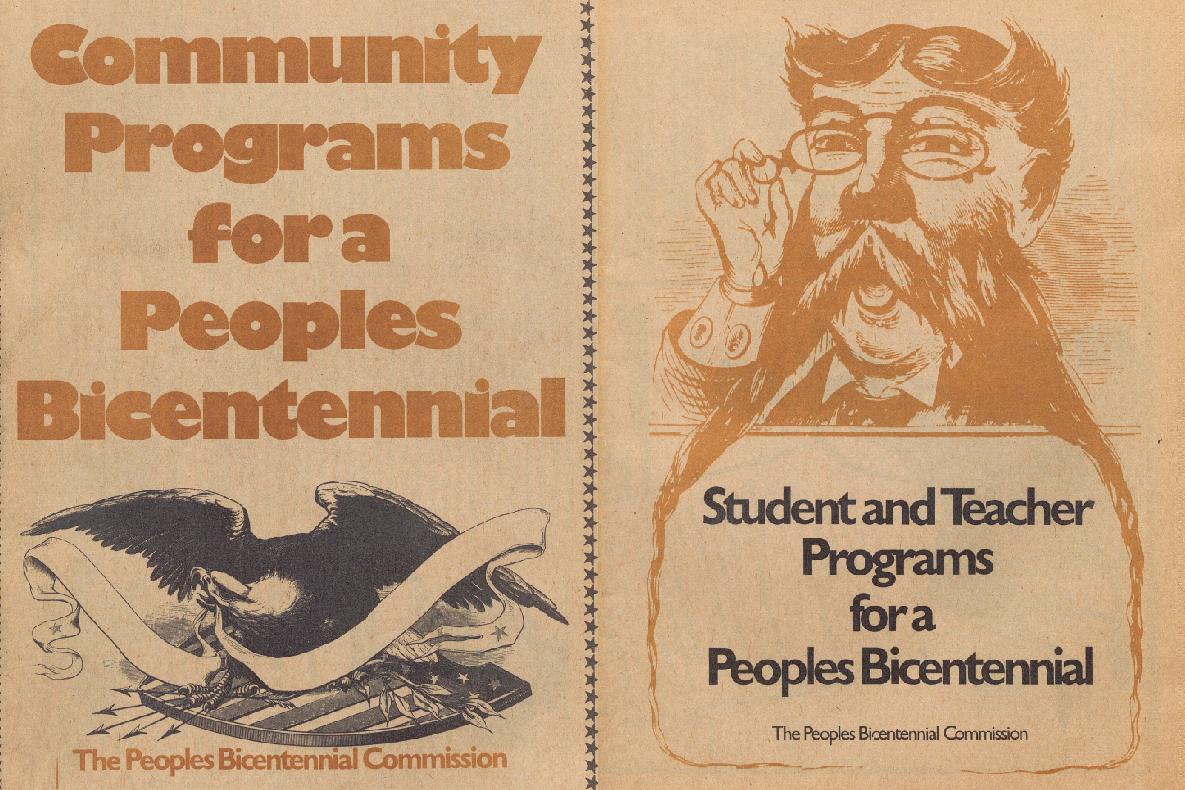
Cover of a pamphlet titled Student and Teacher Programs for a Peoples Bicentennial published ca. 1974.
After the turbulent, war-torn “Long 60s” (1955–1973), the Bicentennial Era (1973–1976) brought a different kind of national crisis. Watergate and its aftermath shattered trust in the executive branch, culminating in President Richard Nixon’s resignation. His successor, Gerald Ford, inherited political instability and survived two assassination attempts in one month. Americans were emerging from a severe recession after the post World War II expansion. The 1973 Yom Kippur War — and U.S. support for Israel — contributed to an OPEC production cut and oil embargo, leading to gasoline shortages and long lines at stations. High inflation caused in part by high military spending, high unemployment, and slow growth induced what is known as “stagflation.” By the mid-1970s, many Americans were deeply dissatisfied with the country’s direction.
Founded by antiwar activists Jeremy Rifkin and Ted Howard, the Peoples Bicentennial Commission sought to shape how the nation marked its 200th anniversary. Drawing on the language and ideals of the Founding Fathers — and supported in part through grant funding connected to the official American Revolution Bicentennial Commission — the PBC produced pamphlets, study guides, syllabi, posters, and public programs. It argued that the Bicentennial should highlight the revolutionary origins and democratic promises of independence, rather than become a commercial spectacle.
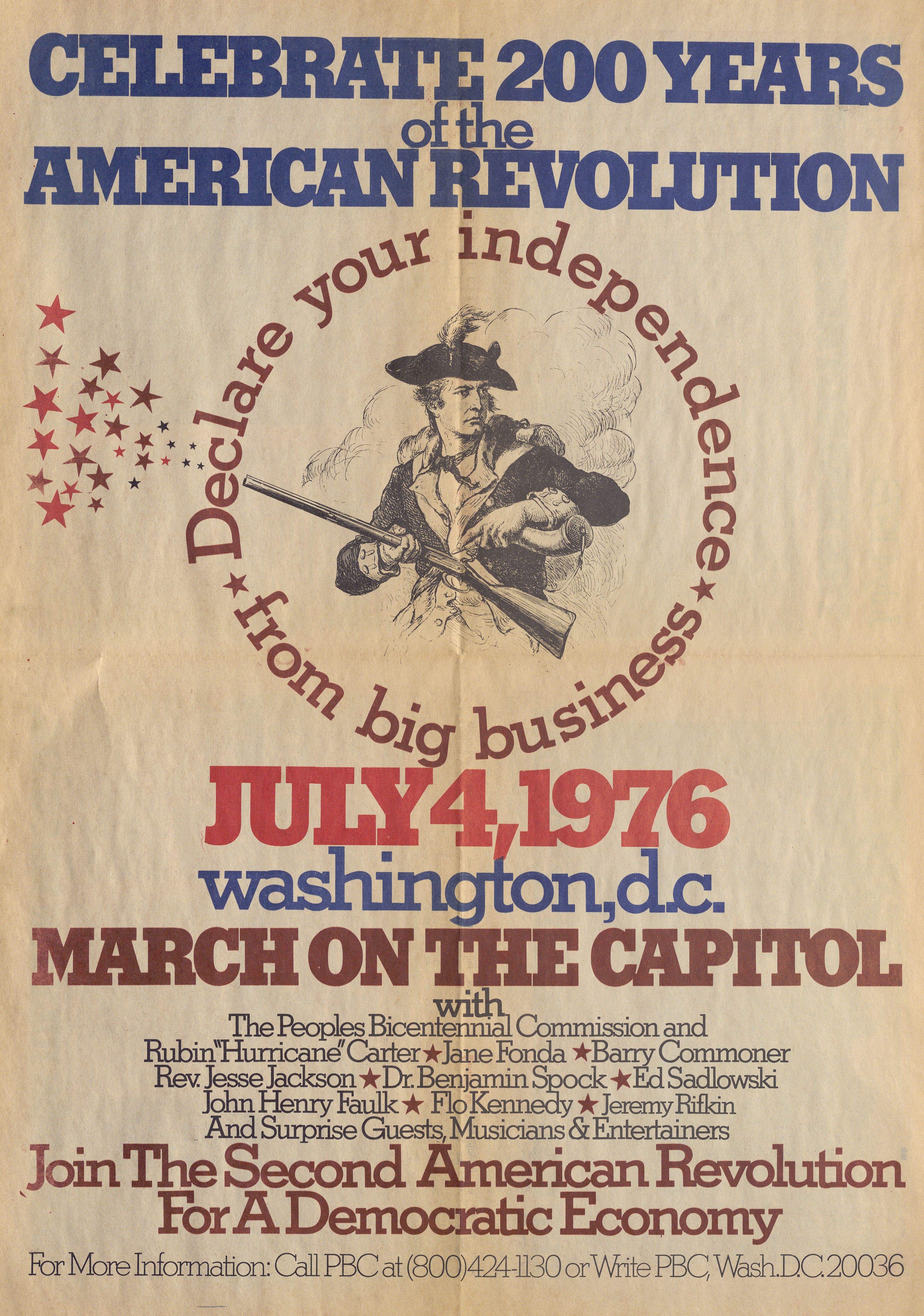
"Declare your independence from Big Business" Poster advertising a March on the Capitol to Celebrate 200 Years of the American Revolution on July 4, 1976.
The PBC criticized the commodification of the anniversary, warning that consumer goods and promotional campaigns distracted from its political meaning. Local chapters were encouraged to organize around issues affecting working people, including tax reform and child care, and to present multimedia programs in churches, labor unions, youth groups, and classrooms, sometimes incorporating theatrical performances.
Come explore the PBC and their approach to the founding anniversary in our latest exhibit.
The People's Bicentennial will be on view in the Hatcher Gallery Exhibit Room from May 8 to September 20!